
How Long Does A Resin Driveway Take To Set

Resin has quickly become one of the UK’s favourite driveway surfaces, thanks to its fast installation, durable performance, and stylish finishes. Homeowners often have questions about the process, and one of the most common is how long it takes for a resin driveway to set.
In this article, we’ll cover everything you need to know about the resin driveway setting process, from the initial set and when it’s safe to walk on the surface, to the full curing time when your driveway is ready for vehicles.
This guide provides clear expectations for your driveway installation, along with tips to avoid common mistakes and ensure a long-lasting, high-quality finish.
The Resin Driveway Setting Process
Stage One: Subbase Preparation
The first stage of your project involves preparing the subbase. The driveway area is excavated, and a layer of crushed stone is laid and compacted. This ensures proper drainage once the resin driveway is installed and provides a stable foundation for the resin surface.
Stage Two: Resin Application
Once the subbase and edge restraints are in place, the resin is carefully mixed with your chosen aggregate (stone chips). This mixture is poured onto the prepared subbase and spread evenly using a hand trowel, beginning the setting process.
Stage Three: Setting and Curing
During setting, the resin binds with the stones to form a solid surface. The driveway is then left to cure, allowing it to harden sufficiently to support both foot and vehicle traffic.
Typical Resin Driveway Setting & Curing Times
The setting and curing stages of a resin driveway are critical, as this is when the surface is most vulnerable to damage from both foot and vehicle traffic. Below, we outline the key differences between setting and curing, along with typical timeframes.
Initial Set Time
During the initial set, the resin begins to bind the stones together, forming a semi-solid surface. This process usually takes 6–12 hours, depending on factors such as weather and the type of resin used. During this time, the surface must be protected from both foot and vehicle traffic to prevent any damage.
Full Curing Time
Full curing occurs when the resin has completely bonded with the stones and the surface has hardened. This typically takes 24–48 hours, though it can vary based on weather conditions and resin type. Only after this period is the driveway ready to safely support both foot and vehicle traffic.
Factors That Affect Resin Driveway Setting Time
There are several factors that can influence how quickly the resin sets, affecting both the installation process and the time it takes before the driveway can be used.
Resin Type
The first and most significant factor is the type of resin used. Resin formulations vary in their chemical composition, with some designed to cure more quickly for faster installations, while others may set more slowly to allow for more complex designs or larger aggregate mixes.
Weather Conditions
Weather and humidity also play a significant role. Cooler conditions can slow the curing process, while warmer temperatures can speed it up. Some resin suppliers even adjust their resin formulas seasonally to ensure consistent and efficient setting times.
Aggregate Selection
The aggregate used in your resin driveway is another important factor. The type, size, and mix ratio of the stones can all affect how quickly the resin binds. Additionally, the thickness of the resin layer impacts curing time, deeper installations naturally take longer to set.
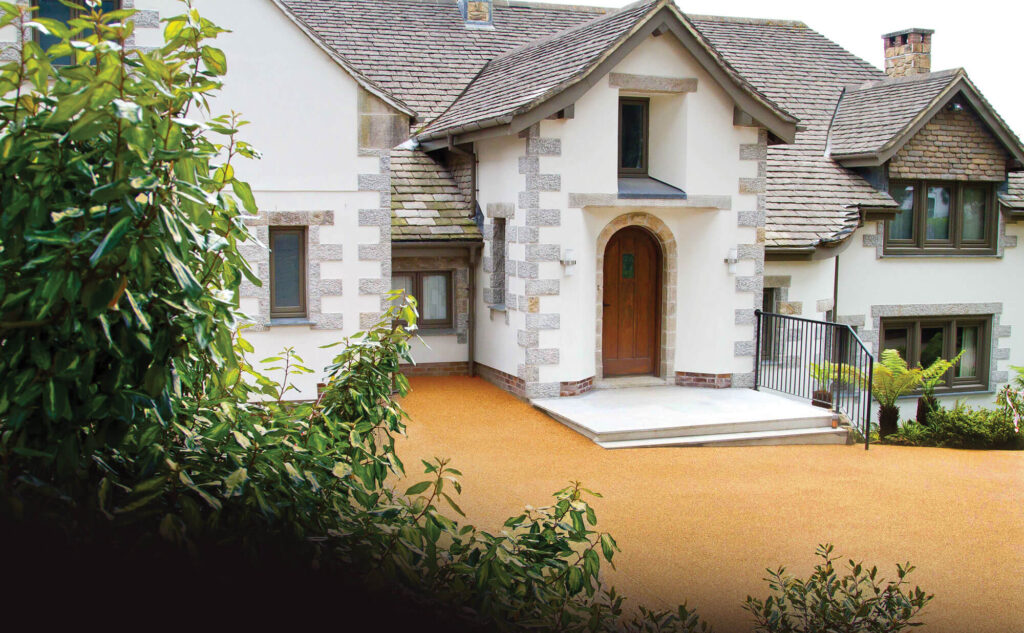
When Can You Walk or Drive on Your Resin Driveway
A resin driveway is typically safe to walk on 6–12 hours after installation. However, we always recommend checking with your installation team for their guidance, as factors such as weather conditions, resin formulation, and aggregate selection can affect setting times.
Signs Your Resin Driveway Has Fully Set
The most reliable way to ensure your resin driveway has fully set is to wait 48 hours after installation before using it as normal. However, there are also some visual cues that can give you a good indication that the surface is ready.
A fully set driveway should have a consistent colour and texture across the entire surface. It should feel firm underfoot, with no soft spots, and there should be no residual stickiness when walking on it. These signs indicate that the resin has cured properly and the driveway is ready for use.
Avoiding Common Resin Driveway Mistakes
The best way to avoid mistakes when installing a resin driveway is to hire a professional. While many people consider resin driveways as a DIY project, this can carry a range of risks, not just incorrect setting times, but also issues like improper installation, poor drainage leading to pooling, or surface imperfections that affect the overall appearance.
By choosing a professional resin driveway company, you benefit from their years of expertise and guidance on maintaining your driveway after installation, including advice on setting times and when it’s safe to walk or park on the surface. All Oltco resin driveways come with a guarantee of up to 20 years, providing added peace of mind.
Ready to transform your driveway? Contact Oltco today to discuss your project and arrange a free consultation.