
Resin Driveway Thickness: How Thick Should a Resin Driveway Be?

If you’re considering installing a resin bound driveway, you may be wondering how thick a resin driveway should be. Thickness is an important factor in ensuring your driveway is durable, long-lasting and able to withstand regular vehicle traffic.
When installed correctly, a resin bound driveway provides a durable surface that enhances the appearance of your home while remaining practical for everyday use.
In this guide, we explain the typical thickness of a resin driveway and why proper installation is essential.
What Is the Standard Thickness of a Resin Driveway?
In most residential installations, a resin-bound driveway is typically laid at a depth of around 18-20mm.
This thickness allows the resin and decorative aggregates to bind together effectively, creating a durable surface suitable for cars and light vehicles.
The exact thickness may vary slightly depending on:
- The size of the aggregate used
- The condition of the existing base
- The expected level of traffic
Professional installers will always assess the existing surface before determining the correct depth for the installation.
Why Resin Driveway Thickness Matters
The correct thickness is essential for ensuring your driveway performs well over time.
Strength and Durability
A properly installed resin surface at the correct thickness provides a strong and long-lasting driveway that can handle daily vehicle use.
Smooth, Attractive Finish
Installing the resin at the right depth ensures the aggregates are evenly distributed, creating the smooth and visually appealing finish that resin bound surfaces are known for.
Permeability
Resin bound systems are designed to be permeable, allowing water to drain naturally through the surface. Installing the driveway at the correct thickness helps maintain these drainage properties.
What Lies Beneath a Resin Driveway?
While the resin surface itself is relatively thin, the overall strength and durability of a resin bound driveway largely depend on the base layer beneath it. A properly prepared base provides the structural support needed to handle the weight of vehicles and ensure the surface remains stable over time.
Resin bound driveways are usually installed on top of a solid base such as:
- Concrete
- Tarmac (asphalt)
- A specially prepared permeable base
In many cases, permeable bases are used to support the natural drainage properties of resin bound surfaces, helping water pass through the driveway rather than pooling on top.
This porous structure means that resin bound driveways remain permeable, allowing rainwater to filter through the surface and into the ground below. As a result, they are often SUDS compliant, helping to manage surface water and reduce puddles.
When the base is installed and prepared correctly, the resin layer can then be applied smoothly across the surface, creating the decorative, durable finish that resin driveways are known for. This combination of a strong base and permeable surface helps ensure the driveway remains long-lasting for everyday use.
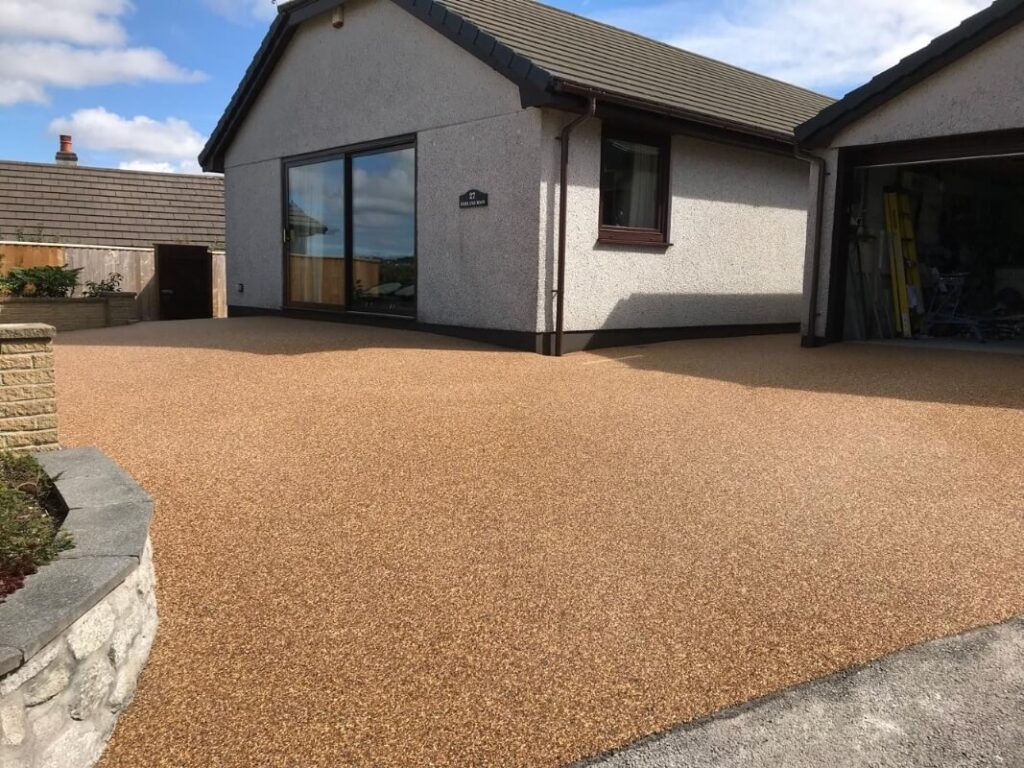
Can Resin Driveways Be Installed Over Existing Surfaces?
In many cases, resin can be installed over existing surfaces such as concrete or tarmac, provided the base is still in good condition.
Before installation, the surface must be:
- Structurally sound
- Clean and stable
- Free from cracks or movement
If the existing surface is damaged or unsuitable, additional groundwork may be required to create the proper foundation for the new driveway.
Professional Installation Matters
Achieving the correct resin driveway thickness requires experienced installation and careful preparation. Our expert team will assess the condition of the existing surface, ensure the base is structurally sound, and determine the appropriate depth for the resin layer based on the aggregate size and expected level of use.
Professional installers will:
- Assess the existing base
- Ensure the correct aggregate size is used
- Lay the resin surface at the proper depth
- Create a smooth, even finish
When installed correctly by our professionals, the resin layer forms a smooth surface that can withstand daily vehicle traffic while maintaining its appearance for many years.
So, How Thick Should a Resin Driveway Be?
To summarise, in most cases, a resin bound driveway is installed at a thickness of around 15–18mm, depending on the aggregate size and the existing base. While the resin layer itself is relatively thin, the strength of the system comes from the solid base beneath it.
With the right preparation and professional installation, a resin driveway can provide an attractive surface that enhances the look of your home. Considering a new driveway? Our specialist team is ready to guide you through the entire process, offering tailored advice to suit your property. Get in touch or locate your local team to start planning today.